Mirrorless vs DSLR: Which Is Better for Beginners? (November 2026)
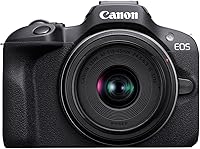
For mirrorless vs DSLR for beginners, the Canon R50 is the stronger choice for moving subjects and video. Choose the Rebel T7 if you want an optical viewfinder and plan to learn mainly through still photography.
On this page (12 sections)
- Mirrorless vs DSLR for beginners: what is the main difference?
- Which camera is easier to focus on moving subjects?
- Which viewfinder and screen suit your way of shooting?
- Who should buy the Canon R50, and who should skip it?
- Who should buy the Rebel T7, and who should skip it?
- How do the included lenses affect your choice?
- Which camera fits video and phone sharing better?
- Which kit will you actually carry?
- How should you set up your first camera?
- Which beginner mistakes should you avoid?
- How do you care for either camera kit?
- Which camera should a beginner choose?
For mirrorless vs DSLR for beginners, the Canon R50 is the stronger choice for moving subjects, video and flexible framing. Choose the Rebel T7 if you specifically want an optical viewfinder and expect to concentrate on still photos.
Both kits give you a camera and a zoom lens, so either can teach the basics of photography. The useful differences are how you see the scene, how the camera follows your subject and which lenses fit later.
Don't choose by the camera label alone. These 2 models show why features that match your daily use matter more than a broad mirrorless or DSLR claim.


Mirrorless vs DSLR for beginners: what is the main difference?
The main difference is how you view the scene: mirrorless cameras use an electronic display, while a DSLR's optical viewfinder uses a mirror to show the view through the lens. That changes the framing experience, not the basic rules of photography.
An electronic viewfinder shows an image from the sensor. It can help you judge brightness before taking a photo, though the preview depends on your settings and viewing mode.
An optical viewfinder gives you a direct optical view. You'll check the captured image and exposure information to see how your settings affected the result.
For a fuller explanation, read what a mirrorless camera is. Neither design removes the need to learn light, timing and composition.
Which mirrorless vs DSLR differences matter most for beginners?
Focus help, viewing comfort and lens compatibility deserve more attention than small differences in resolution. The R50 has a 24.2 MP APS-C sensor, while the T7 has a 24.1 MP APS-C sensor.
That tiny resolution gap should not decide your purchase. A sharp, well-timed picture with a clear subject matters far more than the difference between those numbers.
Write down your 3 most common subjects before comparing features. A parent photographing active children has different needs from someone learning portraits with a cooperative friend.
Which camera is easier to focus on moving subjects?
The R50 is the stronger choice for people, pets and vehicles in motion because it offers subject detection and tracking. Its Dual Pixel CMOS AF II system provides 651 AF zones across up to the full width and height of the frame.
The Rebel T7 has a 9-point autofocus system with AI Servo AF. It suits more deliberate framing, where you can place a focus point over your subject and take time with the shot.
For a seated portrait or a building, that approach can be quite workable. With a child running toward you, the R50's tracking gives you more useful assistance.
Focus is only part of getting a sharp action photo. If the subject is sharp at rest but blurred while moving, a faster shutter speed may solve the problem.
Burst speed also favors the R50: up to 12 fps with electronic first curtain shutter or 15 fps with electronic shutter, compared with 3 fps on the T7. Use short bursts around the moment you want.
Holding the shutter continuously creates more files to sort and cannot rescue poor focus or slow exposure settings. Practice following the subject before pressing the shutter.
Which viewfinder and screen suit your way of shooting?
Choose the R50 for electronic viewing and adjustable screen angles, or the T7 for optical framing. Comfort matters because you'll use these controls every time you take a photo.
The R50 combines a 2.36-million-dot electronic viewfinder with a vari-angle touchscreen. The movable screen helps when you want to photograph a pet near floor level or frame above a crowd.
The T7 has a fixed LCD and an optical viewfinder with about 95% coverage. Leave a small margin around important subjects because the recorded image includes a little more than the viewfinder shows.
If possible, look through both viewfinder types before choosing. Check whether you can see the frame edges comfortably, especially if you wear glasses.
Also consider where you usually stand. A fixed screen is less troublesome for eye-level photos than for regular low-angle compositions.
Who should buy the Canon R50, and who should skip it?
Buy the R50 for a mix of family photos, pets and video. Its focus assistance and movable screen suit beginners who want to capture events as they happen.
It's also the more suitable option here for someone who expects photography and video to share the same camera. You won't need to make optical viewing the priority to justify the choice.
Skip the R50 if you strongly prefer looking through an optical viewfinder. More features won't improve your experience if you dislike the way you compose every picture.
Also pause if you already have lenses you hope to reuse. Confirm compatibility before choosing a body around equipment you already own.
The included zoom is a useful learning lens, but don't expect it to solve every subject. Distant wildlife and dim indoor action can call for different lens choices and technique.
Who should buy the Rebel T7, and who should skip it?
Buy the Rebel T7 for deliberate still photography with an optical viewfinder. It fits a learner who enjoys slowing down, choosing a focus point and reviewing the result.
Landscapes, buildings and cooperative portrait subjects give you time to practice this way. You can learn aperture, shutter speed and ISO without needing a long feature list.
Skip the T7 if your main subjects rarely stay still or you often compose from awkward angles. Its simpler autofocus and fixed screen make it less suited to those needs than the R50.
Existing Canon EF or EF-S lenses can be a reason to consider it. Check each lens's condition and suitability rather than letting an unused lens decide the whole purchase.
Don't choose a DSLR because you think it teaches photography more properly. The exposure skills you learn apply to both camera types.
How do the included lenses affect your choice?
Both kits include a general-purpose zoom for everyday learning, but neither lens covers every photographic task. Start with the included lens and identify a real limitation before adding another.
The R50 kit includes the RF-S 18-45mm F4.5-6.3 IS STM lens. The T7 kit includes the EF-S 18-55mm f/3.5-5.6 IS II lens.
Both start at 18mm, while the T7 lens extends farther at the long end. That extra reach can help you frame a little tighter without moving closer.
The aperture ranges describe the widest opening available as you zoom. In dim light, these lenses can require higher ISO or slower shutter speeds than a lens with a wider maximum aperture.
Image stabilization can help reduce blur from camera movement. It does not freeze a person moving across the frame, so indoor action still needs enough shutter speed.
The R50 uses Canon's RF mount, while the T7 accepts Canon EF and EF-S lenses. The lenses from these kits do not attach directly to the other body.
Read what a kit lens is if the terms are new. Our guide to whether a kit lens is good enough can help you decide when another lens would solve a specific problem.
Which camera fits video and phone sharing better?
The R50 is the stronger video choice here, with 6K-oversampled, uncropped 4K recording at up to 30 fps and Full HD at up to 120 fps. Its movable screen also helps you check framing from different positions.
Start with short clips and steady camera placement. A clear subject, quiet surroundings and controlled movement usually improve a beginner video more than changing resolution alone.
Use high-frame-rate recording for a clear purpose, such as footage intended for slow-motion playback. More frames per second do not automatically make every clip look better.
For sharing, the R50 offers Wi-Fi and Bluetooth, with Canon Camera Connect supporting compatible smart devices. The T7 includes Wi-Fi and NFC.
The T7 also supports webcam use through EOS Utility Webcam Beta Software for compatible Mac and Windows setups. Confirm your computer and software compatibility before making webcam use a deciding factor.
Try the transfer process before a trip or family event. Keep the originals on your memory card until you've confirmed that your files are safely copied.
Which kit will you actually carry?
Choose the kit that fits your normal outing, including the attached lens and a protective bag. A camera that stays home cannot help you learn.
Canon describes the R50 as compact and lightweight, but body size alone is not enough to judge comfort. Consider the grip, strap and space the complete kit needs.
Keep your first setup simple. One lens, a charged battery and a compatible memory card make practice easier than a bag full of accessories.
If either interchangeable-lens kit feels too bulky, compare whether compact cameras are worth it. A simpler camera may fit your routine better if changing lenses holds little appeal.
How should you set up your first camera?
Start with automatic exposure and a clear focusing goal, then add control gradually. You can learn composition immediately without setting every exposure value yourself.
- Charge the battery and fit the strap. Attach the lens securely and choose a memory card that meets the camera's requirements.
- Set the date and time. Correct file dates make photos easier to organize after several outings.
- Begin with JPEG photos. Add RAW later if you want more editing control and are ready for the extra workflow.
- Choose the subject deliberately. Check where focus lands rather than assuming the camera knows which person matters.
- Review a few images closely. Look for missed focus, movement blur and distracting objects near the frame edges.
Once those steps feel familiar, try aperture priority for stationary subjects. Use shutter priority when controlling movement is the main challenge.
Change one setting at a time and compare the results. This makes it easier to connect a setting with what changed in the picture.
For model-specific help, use our Canon R50 beginner guide. If you're still comparing Canon mirrorless bodies, see Canon R50 vs R100.
Which beginner mistakes should you avoid?
Avoid buying features without matching them to a subject. Make a short list of photos you want, then choose settings and equipment that serve those pictures.
Don't confuse missed focus with movement blur. Focus errors put the sharp area in the wrong place, while motion blur can streak a correctly focused subject.
Don't expect automatic exposure to preserve every bright window and dark face in the same scene. Move your subject toward softer light or change your angle before reaching for another camera.
Resist buying several lenses immediately. Use the kit zoom long enough to learn whether you need more reach, a wider view or better options for low light.
Finally, avoid leaving every image on one memory card. Copy photos regularly and keep another backup of files you would hate to lose.
How do you care for either camera kit?
Keep dust, moisture and careless handling away from the camera and lens. Basic habits matter more than a large cleaning kit.
Use a lens cap during transport and a protective bag when the camera is packed. Keep drinks separate and avoid placing the camera loose beside hard objects.
Change lenses in a sheltered place with the camera switched off. Prepare the replacement lens first so the body stays open for as little time as possible.
Use a clean lens cloth for glass and avoid wiping grit across it. Don't touch the sensor or mirror; follow the camera manual for cleaning instructions or seek professional help.
After coming indoors from cold weather, let the packed camera warm gradually before opening the bag. This helps limit condensation on cold equipment.
Which camera should a beginner choose?
For mirrorless vs DSLR beginners, choose by your next month of photography: moving children and short videos point toward the R50; patient still photography and a strong preference for optical viewing point toward the T7.
Before ordering, confirm the included lens, memory card requirements and any lenses you plan to reuse. Set aside time for a few practice outings before relying on the camera at an important event.
If you want more context, read Are Mirrorless Cameras Good for Beginners? or explore our beginner mirrorless camera guide.
Your first useful milestone is a set of photos you can explain: why you chose the framing, where you focused and how you handled movement. Either kit can teach those skills, while the R50 provides more help for action and video.
Frequently asked questions
Is mirrorless or DSLR better for a beginner?
The Canon R50 is the better fit here for beginners photographing moving subjects or making videos; the Rebel T7 suits learners who specifically prefer an optical viewfinder and mainly want still photos. Compare the exact models and their lens systems, since camera type alone does not decide how useful a camera will be.
Are mirrorless cameras harder to learn?
Mirrorless cameras are not inherently harder to learn than DSLRs; both types involve focus, shutter speed, aperture and ISO, and you can learn those skills gradually. Start with automatic exposure, practice choosing your subject, then change one setting at a time instead of trying to master every menu immediately.
Do beginner DSLRs have good autofocus?
A beginner DSLR can provide useful autofocus for everyday still photography, but capability varies by model and subject; the Rebel T7 has 9 autofocus points and AI Servo AF. For people, pets and vehicles in motion, the R50's subject detection and wider autofocus coverage make it the stronger choice between these kits.
Should a beginner buy a camera with a kit lens?
A kit lens is a sensible first choice for learning framing, focus and exposure without choosing a separate lens; use it for several outings and note what you cannot capture. Add another lens when you can name a clear need, such as more reach or a wider aperture for dim light.
Can I use DSLR lenses on a mirrorless camera?
Some DSLR lenses can work on mirrorless bodies through a compatible adapter, but compatibility depends on the camera and lens; the T7 accepts Canon EF and EF-S lenses, while the R50 uses the RF mount. Check the exact combination and any adapter requirements before buying or moving lenses between systems.