Are Compact Cameras Worth It?
Compact cameras are worth it when their optical zoom or small, all-in-one design solves a real need. Choose one for the photos you want to take, rather than expecting every compact to improve on your phone.
On this page (7 sections)
- Are compact cameras worth it for everyday photos?
- What do compact cameras do better than phones?
- How do you choose a compact camera you'll actually use?
- How should you set up and care for a compact camera?
- What mistakes make a compact camera feel disappointing?
- When is a compact camera not worth it?
- How should you decide whether a compact camera is worth it?
Compact cameras are worth it when they give you useful optical zoom or a dedicated camera you'll carry. They make less sense if you expect any small camera to produce better photos than your phone.
The key is choosing a benefit you can name: closer framing from a distance, fewer phone distractions, or one camera without extra lenses. That benefit should justify carrying, charging, and transferring photos from another device.
Are compact cameras worth it for everyday photos?
A compact camera is worth considering for everyday photos if its built-in lens fills a gap in your phone setup. It also suits people who prefer keeping photography separate from calls and apps.
Look through your recent photos before shopping. If you often crop distant subjects, optical zoom deserves attention; if most pictures show nearby people indoors, zoom alone won't solve your main needs.
A fixed lens keeps the setup simple, but it also sets limits. You can't replace it later with a wider lens or one better suited to dim rooms.
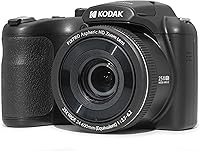
Kodak PIXPRO FZ55: for simple outings and casual photos
The Kodak PIXPRO FZ55 suits someone who wants a straightforward camera for daylight walks, family outings, and short clips. Its slim body fits in a pocket or small bag, making it practical to keep nearby.
The wide setting helps when fitting people or a landscape into the frame. Its 16MP sensor and 1080p video cover still photos and ordinary clips without making advanced video features the reason to buy.
Skip the FZ55 if distant subjects are your main goal, or if you specifically need 4K recording. Don't buy it solely for the megapixel number, which doesn't tell you how it compares with your phone.
Our Kodak PIXPRO FZ55 review offers a closer look if this simple approach fits your plans.
Canon PowerShot ELPH 360 HS: for casual shooters who want more reach
The Canon PowerShot ELPH 360 HS suits travelers who want to frame distant details without changing lenses. It makes sense when flexibility from one shooting spot matters more than building a camera system.
Optical stabilization helps reduce blur from camera shake, especially as you zoom in. It doesn't freeze a moving child or animal, so subject movement still calls for enough light and a suitable shutter speed.
Built-in Wi-Fi and NFC support transfers to a smartphone. Hybrid Auto can record up to 4 seconds before each photo and combine clips and stills into a daily recap.
Skip the Canon if advanced subject tracking is your priority. Choose it for casual framing flexibility and simple photo sharing, rather than expecting every distant or moving subject to come out sharp.
What do compact cameras do better than phones?
Compact cameras can offer optical reach and dedicated camera controls that better suit deliberate photography. The gain depends on the camera and the phone you're comparing.
Optical zoom changes framing through the lens, while digital zoom crops and enlarges the image. Phones vary in their lens options, so compare the views you actually use rather than assuming a separate camera always reaches farther.
A dedicated camera also lets you take photos without opening messages or draining the device you use for maps. In return, you need a plan for moving those photos somewhere you'll view and save them.
Don't assume a compact will win in dim light. Phones often combine several exposures automatically, while a camera's results depend on its sensor, lens, settings, and how steadily you hold it.
Is a compact camera worth buying for travel?
A compact camera is worth buying for travel when one built-in lens covers the scenes you expect to shoot. Choose around your route: wide street views, family groups, distant buildings, or moving subjects.
The Sony RX100 VII suits travelers who want more focus and video options in a compact camera. Its 20.1MP 1.0-type stacked CMOS sensor gives it a different starting point from simpler models.
Sony includes real-time tracking, human eye autofocus for photos and movies, and animal eye autofocus for stills. Those features make it the strongest candidate here for buyers who regularly photograph moving people or pets.
It also records 4K video and has a microphone jack. These are useful reasons to choose it if you plan to make videos with an external microphone.
Skip the RX100 VII if you'll only take occasional snapshots and won't use its focus or video tools. Its extra features make more sense when you have a clear use for them.
Compare the best compact cameras for travel for trip-focused choices. Our broader guide to the best point-and-shoot cameras helps if everyday use matters just as much.
How do you choose a compact camera you'll actually use?
Choose by your hardest common photo, then check whether the camera fits your daily routine. A distant landmark, a moving child, and a dim restaurant each place different demands on a camera.
Match the lens to your subjects
Favor a wider view for groups, buildings, and tight spaces. Favor more telephoto reach for details you can't approach, while remembering that stronger zoom also makes steady handling more important.
Compare actual focal-length ranges when available, because a zoom multiplier alone doesn't show how wide a lens starts. More reach isn't a substitute for a view that fits your usual subjects.
Put focus and light ahead of megapixels
For moving subjects, focus behavior and shutter speed matter more than a small difference in resolution. For indoor scenes, consider sensor size and lens aperture rather than choosing by pixel count.
A wider aperture can admit more light, but it doesn't guarantee a sharp moving subject. Camera shake, missed focus, and subject movement are separate problems.
Check the full routine
Think through taking, saving, and sharing a photo. If transferring files feels like a chore, wireless features may matter more to you than another shooting mode.
Also check memory-card requirements, charging arrangements, and how the camera fits in your bag. For comparisons with interchangeable lenses, start with what a mirrorless camera is.
How should you set up and care for a compact camera?
Start with a charged battery, a compatible card, and a secure wrist strap. Learn the basic controls before an outing so you aren't searching menus while a moment passes.
For the FZ55, use a Class 10 SD, SDHC, or SDXC card up to 512GB. Kodak directs users to charge its included battery for at least 4 hours before first use; ordinary charging takes about 2 hours.
Its stated battery capacity is about 200 shots per charge. Plan charging around your day, since video use and time spent reviewing photos affect how long a battery lasts.
Back up existing files before formatting a card in the camera. Then set the date and time, choose a photo size, and learn how to review and delete images.
Start in automatic mode, then practice focusing on a nearby subject and zooming toward a distant one. Review a few images enlarged so you can spot blur that a small preview hides.
Use the strap, keep fingers away from the lens mechanism, and switch the camera off before putting it away. Keep sand and grit out of the pocket or pouch where you store it.
Remove loose dust before gently wiping the lens with a clean lens cloth. Avoid rubbing grit across the glass, and keep the camera away from water unless its instructions explicitly allow exposure.
For packing and backup planning, see how to travel with a camera.
What mistakes make a compact camera feel disappointing?
The biggest mistake is expecting the camera to improve every photo automatically. Better framing and suitable light often matter more than switching devices.
- Using digital zoom by default: stay within optical zoom when possible, then crop later if needed.
- Zooming fully in indoors: try a wider view and move closer when safe, giving yourself an easier shot to hold steady.
- Confusing stabilization with motion control: stabilization reduces camera shake, but a moving subject can still blur.
- Keeping every photo on one card: copy important images to another device and maintain a separate backup.
- Buying for an imagined hobby: choose for the outings you take now, with room for skills you realistically want to learn.
When is a compact camera not worth it?
A compact camera isn't worth it if you won't carry it or it adds no useful capability. Keeping your phone is a sensible decision when it already handles your usual photos.
Choose another camera type if changing lenses is central to your plans. A built-in lens can't later become a specialist lens for a different task.
Our comparison of mirrorless cameras versus point-and-shoot cameras explains that choice. Consider the size of the complete camera-and-lens setup, since that is what you'll carry.
How should you decide whether a compact camera is worth it?
Compact cameras are worth it when you can name the photos or habits they'll improve. Decide which benefit matters, then choose the simplest model that delivers it.
Pick the FZ55 for straightforward casual photography, the Canon for more zoom reach with optical stabilization, or the Sony for tracking moving subjects and more video options. Skip a separate camera if none of those benefits solves a problem you have.
Before buying, decide where you'll carry it and how you'll save its photos. If a compact fits that routine, compare budget compact cameras to narrow your choice.
Frequently asked questions
Are compact cameras better than phone cameras?
Compact cameras can be better for optical zoom and a separate shooting experience, but they aren't an automatic image-quality upgrade. Your phone may suit quick indoor snapshots and instant sharing better, so choose a compact for a specific benefit you need rather than its megapixel count.
Are compact cameras good for travel?
Yes, compact cameras suit travel when you want a built-in lens without carrying extra lenses; match the zoom range to your destinations, then plan charging, storage, and backups before leaving. A camera that fits your daily bag and photo habits is more useful than one you leave at the hotel.
Do compact cameras have better image quality than mirrorless cameras?
Compact cameras don't generally offer an image-quality advantage simply because they're compact. Sensor size, lens design, lighting, and camera settings matter more than the category name, while interchangeable-lens mirrorless cameras let you choose a different lens for a specific task; compare complete setups for the scenes you shoot.
Should I buy a compact camera or a mirrorless camera?
Choose a compact camera for a small all-in-one setup, or mirrorless if changing lenses and building a system matter more to you. Think about what you'll carry and photograph, then compare the trade-offs in our guide to mirrorless cameras versus point-and-shoot cameras.