Is the Sony A6400 Good for Beginners?
Yes, the Sony A6400 is good for beginners who want to learn photography with eye autofocus and interchangeable lenses. Choose its kit for everyday photos; compare the Nikon Z30 if recording yourself is your main goal.
On this page (8 sections)
- Is the Sony A6400 good for beginners?
- What makes the A6400 useful as a first camera?
- Is the A6400's kit lens enough to learn with?
- How should you set up the A6400 for your first week?
- Which beginner mistakes should you avoid?
- How does the A6400 compare with other beginner cameras?
- How should you use and care for it on family trips?
- Should you buy the Sony A6400 as a beginner?
Yes, the Sony A6400 is good for beginners who want a camera they can learn with, especially for portraits, family moments, and travel. Its eye autofocus helps with people, while interchangeable lenses leave room to explore different subjects later.
Buy it because you want more control over your photos, not because a camera upgrade will solve every missed shot. Learning where to stand, how to use light, and when to raise shutter speed matters more than buying extra lenses on day one.
Is the Sony A6400 good for beginners?
Yes, the A6400 suits beginners willing to practice with a separate camera. You can start with simple settings and learn exposure as you become comfortable.
Its appeal is the balance between help now and choice later. Autofocus can handle part of the work while you learn composition, and the Sony E mount lets you choose compatible lenses when you have a clear reason.
Skip it if you want every photo ready to share with almost no thought or extra gear. A separate camera brings charging, file transfers, storage, and another item to carry.
If you're still choosing a camera type, read whether mirrorless cameras are good for beginners. Decide whether that routine fits your life before comparing individual models.
What makes the A6400 useful as a first camera?
The A6400 gives you eye autofocus, a tilting LCD, and an included zoom for learning everyday photography. These features help with focus and framing without requiring a separate lens choice.
Eye autofocus is useful for portraits because the eyes are usually where you want attention. Check which person the camera has selected in a group, since automatic focus can't know who matters most to your picture.
The tilting screen helps you compose from different heights. For a child's portrait, lowering the camera toward their eye level can improve the picture more than adding another accessory.
Sony A6400 for beginners: a starting kit
Choose this kit if your main goal is still photography and you want to explore lenses over time. Skip it as an automatic choice for self-recording; compare screen movement and audio features with a creator-focused alternative first.
The camera also supports 4K video, so you can explore short clips alongside stills. Start with a steady, well-lit scene and clear framing before adding camera movement.
Is the A6400's kit lens enough to learn with?
Yes, the 16-50mm kit lens is enough to begin with everyday scenes, people, and travel details. Use it until you can name a specific photo it prevents you from taking.
At the wider end, practice including a person and their surroundings. Toward the longer end, try tighter framing that leaves distracting objects outside the picture.
Zooming and moving your feet do different jobs. Changing your position changes the relationship between your subject and the background, while zooming from the same position changes how much of the scene fits.
For portraits, avoid moving very close to someone's face at the widest setting. Step back and use a tighter view when space allows.
Our guide to what a kit lens is explains the role of a bundled zoom. Read whether a kit lens is good enough when you can identify a repeat limitation, such as needing a wider view or more reach.
How should you set up the A6400 for your first week?
Start with automatic exposure and a simple practice routine so you can learn framing and focus without changing several controls at once. Add one new skill after you can repeat the previous one.
- Prepare the basics. Charge the battery, attach the strap securely, and fit a compatible memory card before your first outing.
- Prepare the card. After backing up any existing files, format it in the camera; formatting erases its contents.
- Begin with JPEG photos. This keeps early file handling simple while you learn to review and organize pictures.
- Practice with one person. Use eye autofocus, make several compositions, and check that the intended face is sharp.
- Review at a larger size. Look beyond the small camera preview to judge focus, blur, and distracting backgrounds.
During the next session, photograph the same subject near a window and farther into the room. Notice how light changes the result before trying to correct everything with settings.
Then learn shutter speed for movement and aperture for depth of field. Change one variable at a time so you can connect each choice to what happens in the photo.
Keep an early folder of successful pictures and another of mistakes worth understanding. A small set of explained mistakes teaches more than hundreds of unreviewed frames.
Which beginner mistakes should you avoid?
Avoid buying accessories before diagnosing the problem in your photos. A dark picture, a moving subject, and missed focus need different fixes.
If the background is sharp but the person is soft, check focus placement. If a moving hand blurs while nearby objects stay clear, try a faster shutter speed.
If the whole picture looks smeared, work on holding the camera steady and check shutter speed. Don't assume a different lens is the first answer.
The A6400 can shoot continuously at up to 11 frames per second, which helps capture changing expressions. Use short bursts and choose the strongest frame afterward; holding the button down creates more files without improving your timing.
Avoid changing several settings after every disappointing shot. Return to a known starting point, change one thing, and compare the result.
How does the A6400 compare with other beginner cameras?
Choose by what you'll make most often: everyday photographs, self-recorded video, or a straightforward introduction to a particular lens system. All 3 kits provide a starting zoom, so the practical differences deserve more attention than the badge on the body.
Nikon Z30 for beginners who record themselves
The Nikon Z30 suits beginners whose main projects are tutorials, talking-to-camera clips, or streaming. Its flip-out touchscreen lets you frame yourself, and its built-in stereo microphone has adjustable sensitivity.
The kit includes a 16-50mm zoom, eye tracking for people and pets, and USB-C webcam operation. These features make it a useful alternative when you expect to spend more time in front of the lens than behind it.
Skip choosing it mainly for those creator features if you don't plan to use them. For still photography, compare how each camera feels in your hands and whether its controls suit your learning style.
Canon EOS R100 for everyday still photos
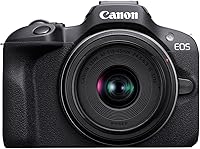
The Canon R100 suits beginners who want an interchangeable-lens kit for everyday pictures and are comfortable composing with a fixed screen. Its kit includes the RF-S 18-45mm lens, human face and eye detection, and a 24.1-megapixel APS-C sensor.
Its continuous shooting reaches 6.5 shots per second in One-Shot AF. That focus condition matters, so don't compare the number alone when deciding how to photograph movement.
Skip it if screen movement is central to how you'll shoot. A fixed display gives you less freedom for framing from awkward heights or checking your own composition from in front of the camera.
For more options, see the best beginner cameras for family photos and travel. Our Sony A6400 review gives more detail if the Sony remains your preferred kit.
How should you use and care for it on family trips?
Carry one familiar lens and a simple routine for family outings. A camera you can reach quickly is more useful than extra gear buried in a bag.
Before an important event, practice photographing someone walking toward you and turning their head. Review your focus choices and shutter speed while there's still time to adjust.
On trips, use the strap and put the camera away when it could be knocked or splashed. Keep a lens cap on during storage, and remove loose dust with a camera blower before using a clean lens cloth.
When changing lenses, switch the camera off and work away from wind or blowing dust. Avoid touching the sensor or wiping it with an ordinary cloth.
Back up photos before erasing the card, and keep charged equipment ready for the next day. Our guide to traveling with a camera covers planning your carry routine.
If you consistently leave the kit behind, reconsider your camera type. Compare whether compact cameras are worth it when carrying less matters more than changing lenses.
Should you buy the Sony A6400 as a beginner?
The Sony A6400 is good for beginners who want to learn photography and keep using the same lens system as they improve. Choose the kit, learn it through regular outings, and delay upgrades until a specific limitation becomes clear.
Choose the Nikon Z30 when self-recording and webcam use lead your plans. Consider the Canon R100 for everyday stills if its fixed screen suits you and you prefer starting with Canon RF lenses.
Before ordering, account for a memory card, protection during travel, and a way to back up photos. For another focused comparison before committing to Sony, read our Canon R50 versus Sony A6400 guide.
Frequently asked questions
Is the Sony A6400 easy to use for a beginner?
The Sony A6400 is approachable if you learn one task at a time; start with automatic exposure, practice placing focus on your subject, and review your photos before changing more settings. Eye autofocus helps with portraits, but you'll still need to watch light, framing, and subject movement.
Is the Sony A6400 worth buying as a first camera?
The A6400 is worth considering if you want to learn photography and change lenses as your needs grow; start with the included zoom and budget for a compatible memory card and safe storage. Skip it if you mainly want phone-like convenience and don't plan to practice with a separate camera.
Is the Sony A6400 good for family photos?
Yes, the A6400 suits family photos with eye autofocus and continuous shooting up to 11 frames per second; use short bursts for movement, but check that focus is on the intended person. A faster shutter speed helps with active children; burst shooting alone won't prevent motion blur.
Should a beginner choose the Sony A6400 or Canon R100?
Choose the A6400 if a tilting screen and faster burst shooting fit your plans; choose the R100 if its fixed screen suits how you frame everyday photos and you want to start with Canon RF lenses. Compare the complete kits and handle the controls before choosing a system.