9 Best Cameras for Travel Photography (November 2026)
The best cameras for travel photography include the Kodak PIXPRO FZ55 for casual sightseeing, the Canon EOS R50 Kit (RF-S 18-45mm) for active family trips, and the Canon EOS R100 Kit (RF-S 18-45mm) for learning travel photography.
On this page (7 sections)
- Which camera is best for travel photography?
- The best cameras for travel photography by trip style
- How should you choose the best camera for travel photography?
- How should you set up a travel camera before departure?
- How do you protect a travel camera and avoid lost photos?
- Which mistakes make travel camera purchases disappointing?
- Which travel camera should you choose for your trip?
The best camera for travel photography for casual sightseeing is the Kodak PIXPRO FZ55, thanks to its pocket-friendly body and simple built-in zoom. Choose the Canon EOS R50 kit if your trip includes moving children, varied subjects and plans to learn more camera controls.
Start with the photos you expect to take, then decide how much camera you will carry all day. A city break, a wildlife outing and a self-recorded travel diary call for different tools.
For smaller options, see our best compact cameras for travel. Our guide to traveling with a camera covers carrying and packing choices.
Our picks at a glance
-
1

-
2

-
3
 Best for learning travel photography
Canon EOS R100 Kit (RF-S 18-45mm)
8.8/10 our score
See it on Amazon
Which camera is best for travel photography?
The FZ55 leads for simple pocket carry, while the R50 is the stronger match for travelers who need subject tracking and an adaptable lens system. Choose by trip style rather than treating the highest score as a fit for every photographer.
FairGlance compared carry needs, lens range, focus features and video tools. The order favors practical travel use, but a lower-ranked camera can be the better buy for a specific itinerary.
| Product | Best for | Sensor | Optical zoom | Video | Our score |
|---|---|---|---|---|---|
| Kodak PIXPRO FZ55 | casual sightseeing | 16 MP CMOS | 5x | 1080p Full HD | 9.1 |
| Canon EOS R50 Kit (RF-S 18-45mm) | active family trips | 24.2 MP APS-C | 8.9 | ||
| Canon EOS R100 Kit (RF-S 18-45mm) | learning travel photography | 24.1 MP APS-C | 4K up to 24 fps | 8.8 | |
| Sony a6400 Kit (16-50mm) | action-filled itineraries | APS-C | 8.0 | ||
| Canon PowerShot ELPH 360 HS | relaxed city breaks | 20.2 MP CMOS | 12x | 1080p Full HD | 7.6 |
| Kodak PIXPRO AZ528 | distant outdoor subjects | 52x | 1080p Full HD | 7.5 | |
| Nikon Z30 With Wide-Angle Zoom | self-recorded travel diaries | APS-C | 7.4 | ||
| Canon PowerShot SX740 HS | traveling light with reach | 40x | 4K | 7.3 | |
| Sony RX100 VII | moving subjects without lenses | 20.1 MP 1.0-type | 4K | 6.9 |
The best cameras for travel photography by trip style
Choose a camera whose main strength solves a problem you expect on your trip. The options below separate casual snapshots, moving subjects, distant framing and self-recorded video.
Kodak PIXPRO FZ55: Best for casual sightseeing
- 16 MP CMOS sensor
- 5x optical zoom
- 28mm wide-angle setting
- 1080p video
A slim point-and-shoot for travelers who want a separate camera without planning a lens kit. Its built-in zoom covers nearby people, landmarks and everyday scenes.
Pros
- Pocket-friendly body
- Built-in optical zoom
- Charges in camera over USB
Cons
- Fixed 2.7-inch screen
- Limited reach for distant wildlife
- No 4K video
The FZ55 suits travelers who want a separate camera without managing a lens kit. Its slim shape fits a pocket or small bag, making it a practical choice for walking tours, meals and quick stops.
The 5x optical zoom starts at a 28mm equivalent wide-angle view. That covers nearby subjects and some distant details, though a tight indoor group may require you to step back.
Its fixed rear screen favors ordinary shooting positions rather than self-recording or framing from awkward angles. Skip it if distant animals, fast action or video beyond Full HD are central to your plans.
Power deserves some planning: the battery provides about 200 shots per charge. Charge it for at least 4 hours before first use, then leave time for in-camera USB charging during the trip.
Choose it for a straightforward travel routine, and read our Kodak PIXPRO FZ55 review for a closer look at its limits.
Canon EOS R50 Kit (RF-S 18-45mm): Best for active family trips
- 24.2 MP APS-C sensor
- People, animal and vehicle tracking
- Vari-angle touchscreen
- 4K video up to 30 fps
Subject tracking and a movable touchscreen suit family trips with changing subjects and camera angles. The included zoom gives you a useful starting lens.
Pros
- Tracks people, animals and vehicles
- Vari-angle touchscreen
- Wi-Fi and Bluetooth
Cons
- Included lens offers limited distant reach
- A larger commitment to carry than a pocket compact
The R50 suits family travelers whose subjects rarely stay still. People, animal and vehicle tracking make it a useful choice when a day shifts from portraits to a street performance or a passing train.
The vari-angle touchscreen helps with low viewpoints, overhead framing and recording yourself. An electronic viewfinder gives you another way to compose when you prefer holding the camera to your eye.
Its included zoom handles everyday scenes, but it is not a substitute for a long wildlife lens. Start with that lens and add another only after you can name the shot it prevents you from getting.
Choose the R50 if you will use both its focus tools and room to grow. Skip it if you mainly want a camera that slips into a small pocket between snapshots.
Our beginner camera guide explains the wider choices, while the Canon R50 beginner setup guide helps you prepare before departure.
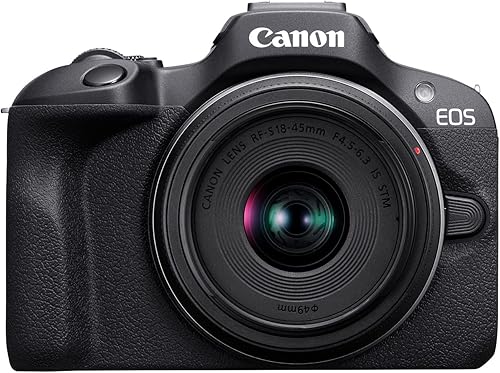
Canon EOS R100 Kit (RF-S 18-45mm): Best for learning travel photography
- 24.1 MP APS-C sensor
- Included 18-45mm lens
- Face and eye detection
- Small, lightweight camera body
A small mirrorless starter kit for travelers who want to learn exposure and add lenses over time. Its fixed screen makes it less suited to filming yourself.
Pros
- Small, lightweight body
- Face and eye detection
- Stabilized kit lens
Cons
- Fixed screen
- 4K uses the central area of the sensor
The R100 suits travelers who want to learn photography through a small mirrorless kit. Its aperture-priority and manual controls give you a path beyond automatic shooting without needing several lenses at the start.
Face and eye detection are useful for portraits of travel companions. The stabilized kit lens also helps reduce camera shake, although it cannot prevent blur when a person moves during a slow exposure.
The main handling compromise is the fixed screen. Skip this kit if you regularly film yourself or want to frame from ground level without crouching behind the camera.
Its 4K mode uses the central area of the sensor, which narrows the view compared with using the full sensor width. Keep that in mind for interiors or clips filmed at arm's length.
Choose it for a still-photo learning kit. Our mirrorless versus point-and-shoot comparison explains what lens flexibility adds to your travel routine.
Sony a6400 Kit (16-50mm): Best for action-filled itineraries

- APS-C interchangeable-lens camera
- 16-50mm kit lens
- Up to 11 fps shooting
- Tilting LCD
Continuous shooting and an interchangeable-lens design suit travelers who photograph moving subjects and want room to expand. The supplied zoom handles everyday scenes.
Pros
- Fast continuous shooting
- Phase and contrast detection autofocus
- Tilting screen
Cons
- Screen tilts rather than articulates
- Kit lens has limited distant reach
The a6400 suits travelers who want to capture short sequences of movement. Its continuous shooting reaches up to 11 fps, giving you several moments to choose from during a jump, a dance or a busy street scene.
Use bursts with a purpose: begin just before the moment you expect, then stop. Holding the shutter through every scene creates more files to sort without improving your timing.
The supplied 16-50mm lens covers everyday framing, and the Sony E mount lets you change the setup later. Buy another lens for a clear need, such as distant subjects, rather than filling a bag before your first trip.
Its tilting screen helps with some high and low viewpoints, but its movement differs from a side-opening screen. Skip it if that screen design is a deciding factor for self-recording.
Choose it for action sequences and lens flexibility. Our Canon R50 versus Sony a6400 comparison helps separate these 2 mirrorless choices.
Canon PowerShot ELPH 360 HS: Best for relaxed city breaks

- 12x optical zoom
- 20.2 MP CMOS sensor
- Built-in Wi-Fi and NFC
- 3-inch LCD
A slim camera for travelers who want more framing options without changing lenses. Wireless sharing helps move selected photos to a smartphone.
Pros
- Versatile built-in zoom
- Optical image stabilization
- Wi-Fi and NFC
Cons
- No 4K video
- Less reach than the longer-zoom choices
The ELPH 360 HS suits relaxed trips where you want varied framing without lens changes. Its 12x optical zoom gives you room to isolate a detail across a square, then return to a wider view.
Optical image stabilization helps counter hand movement, while Wi-Fi and NFC support transferring pictures to a compatible smartphone. Set up that connection before leaving so sharing does not become a menu task during sightseeing.
Hybrid Auto records a short clip before each photo and combines those moments into a recap. It is worth considering if you want a simple record of the day without deliberately filming a separate sequence.
Skip this camera if 4K video or interchangeable lenses are priorities. Its appeal is a slim body with a built-in zoom and automatic exposure.
Choose it for casual stills and short clips. Our best point-and-shoot cameras guide compares other ways to keep your kit simple.
Kodak PIXPRO AZ528: Best for distant outdoor subjects

- 52x optical zoom
- 24mm wide-angle lens
- Optical image stabilization
- Built-in Wi-Fi
A long built-in zoom for trips centered on distant wildlife, landmarks or outdoor events. Choose it when reach matters more than a movable screen.
Pros
- Extensive optical zoom range
- Optical image stabilization
- Wi-Fi photo transfer
Cons
- Fixed screen
- No 4K video
- Full zoom requires careful framing
The AZ528 suits trips where distant outdoor subjects are a main attraction. Its 52x optical zoom starts at a 24mm equivalent wide view, so one built-in lens can frame a broad scene and a distant detail.
That reach is useful from a designated wildlife viewpoint or across a canyon. It does not remove the effects of haze, heat shimmer or poor light between you and the subject.
Find the subject at a wider setting, center it, then zoom in gradually. Starting at full reach makes it harder to locate a bird or keep a moving animal inside the frame.
Optical stabilization helps with hand movement, but use support when possible and keep your shutter speed suitable for the subject. A burst cannot rescue a sequence if every frame has motion blur.
Choose it when reach drives the buying decision. Skip it if your trip is mostly nearby portraits and interiors, or if a movable screen matters more than telephoto framing.
Nikon Z30 With Wide-Angle Zoom: Best for self-recorded travel diaries
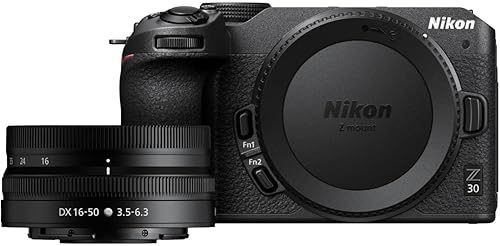
- 16-50mm wide-angle zoom
- Flip-out touchscreen
- Eye tracking for people and pets
- 4K video
The flip-out screen and adjustable stereo microphone suit travelers who speak to the camera. Its Nikon Z lens system also leaves room for later changes.
Pros
- Flip-out touchscreen
- People and pet eye tracking
- Built-in stereo microphone with adjustable sensitivity
Cons
- Creator tools add little for snapshots alone
- Included lens has limited distant reach
The Z30 suits travelers who plan to speak to the camera as well as take photos. Its flip-out touchscreen helps you check framing, and the red recording light provides a clear cue that capture has started.
The built-in stereo microphone has adjustable sensitivity. Record a short sample in your intended location and listen back before filming a long explanation, since wind and surrounding voices can distract from speech.
Eye tracking covers people and pets, while the included stabilized zoom serves everyday scenes. The Nikon Z mount leaves room to add a different lens when your subjects change.
Skip this kit if you will rarely record yourself and mostly want quick snapshots. Its creator features earn their place when video is part of the plan rather than an occasional afterthought.
Choose it for travel diaries with photos alongside them. Our Canon R50 review covers another option with a movable touchscreen and subject tracking.
Canon PowerShot SX740 HS: Best for traveling light with reach

- 40x optical zoom
- 24-960mm equivalent range
- Pocket-friendly body
- Tilting 3-inch LCD
A pocket-friendly long zoom for travelers who want distant details without separate lenses. The tilting screen also helps with self-portraits and low viewpoints.
Pros
- Long optical zoom
- Image stabilization
- Tilting screen
Cons
- Full zoom needs steady handling
- Distant moving subjects require framing practice
The SX740 HS suits travelers who want substantial reach in a pocket-friendly camera. Its 40x optical zoom spans a 24-960mm equivalent range, covering broad views and distant architectural details without separate lenses.
The upward-tilting screen helps with low viewpoints and self-portraits. Its 4K recording also makes it an option for travelers who want detailed clips alongside stills.
Zoom Framing Assist helps you locate a subject when working at the long end. Even with that aid and stabilization, practice finding and following subjects before relying on full zoom during a brief wildlife encounter.
Skip it if distant framing has little place in your itinerary. For street scenes, meals and nearby family photos, the extra reach may matter less than a simpler routine.
Choose it when you want a compact long zoom rather than a lens system. For a shorter zoom and straightforward controls, compare it with the Kodak PIXPRO FZ55.
Sony RX100 VII: Best for moving subjects without lenses

- 20.1 MP 1.0-type sensor
- 24-200mm zoom
- Real-time tracking
- 4K video
Tracking autofocus and a built-in zoom suit travelers who want advanced focus tools without lens changes. Its microphone jack also supports a more involved video setup.
Pros
- Useful built-in zoom range
- Real-time tracking and eye AF
- Microphone jack
Cons
- Animal eye AF is for stills only
- Screen tilts rather than articulates
- Less distant reach than the long-zoom compacts
The RX100 VII suits travelers who want tracking autofocus without interchangeable lenses. Its 24-200mm built-in zoom gives you framing options for streets, portraits and details while keeping the camera self-contained.
Real-time tracking and eye autofocus are its main reasons to consider it over a simpler compact. Human eye autofocus works for stills and movies, while animal eye autofocus applies to stills only.
Continuous shooting reaches up to 20 fps, which can help separate a useful expression or gesture from a brief sequence. Review and delete obvious misses regularly so bursts do not overwhelm your trip archive.
The microphone jack also supports a more involved video setup. Decide whether you want to carry that extra gear before treating it as a reason to buy.
Skip it if you mainly want basic snapshots or need the distant reach of the long-zoom choices. Choose it when focus tools, a built-in lens and compact packing all matter.
How should you choose the best camera for travel photography?
Choose around your subjects, your carrying habits and the complete kit. Sensor resolution alone cannot tell you which camera will suit a walking tour, a family holiday or a wildlife stop.
Compact or mirrorless: which camera suits travel photography?
Choose a compact for a built-in lens and fewer packing decisions. Choose mirrorless when different lenses or more control are part of your plan.
A compact is often easier to fit around meals, transport and sightseeing. Mirrorless makes more sense when you are willing to give photography some time and bag space.
Compare cameras with their lenses attached, rather than comparing bare bodies. Include the strap, charger and any spare lens in your packing decision.
How much zoom will you actually use?
Choose reach based on where you can stand and what you want to frame. Nearby people and street scenes need less telephoto reach than wildlife beyond a viewing barrier.
A zoom multiplier describes the span between a lens's widest and longest settings. It does not tell you the starting view, and kit-lens focal lengths cannot be compared directly with full-frame equivalent numbers without accounting for sensor size.
For a first trip, a general-purpose zoom is a sensible starting point. Our guide to whether a kit lens is good enough explains when another lens solves a real problem.
What matters for evening streets and moving people?
For dim scenes, distinguish camera shake from subject movement. Stabilization helps with your hand movement, while a faster shutter speed helps freeze a moving person.
A steady camera can still record a blurred child walking through a night market. Raise ISO when needed rather than accepting a shutter speed too slow for the subject.
For a still building, brace the camera or use a permitted support. For a person, find brighter light and take several carefully timed frames.
When do screen movement and focus tools matter?
A movable screen matters when you regularly shoot low, overhead or toward yourself. Subject tracking matters most when the distance between you and your subject keeps changing.
For a still landmark, careful framing and a clear focus point may be enough. For children running toward you, continuous autofocus and tracking can reduce the number of settings you must manage at once.
For group portraits, check that every face is sharp. Focusing on the nearest eye does not automatically put a second row of people in focus.
Is a travel camera worth carrying alongside a phone?
Carry a separate camera when you can name the benefit you will use: optical reach, lens choice, focus control or a different shooting experience. A phone can cover quick records while the camera handles the scenes you care about most.
Avoid choosing a camera only for its megapixel count. Our camera guide for travel helps match the equipment to your itinerary.
How should you set up a travel camera before departure?
Prepare the camera before the trip so your first memorable scene is a photo opportunity rather than a setup task. Confirm charging, storage, focus and file transfer while you still have time to resolve problems.
Prepare power, cards and basic settings
Charge the battery, insert a compatible memory card and confirm that the camera can save and replay both photos and video. Check the date and time so files sort correctly after the trip.
Format a card in the camera only after copying anything you need from it. A large card gives you capacity, but it does not replace a backup.
Start with the highest-quality JPEG setting for ready-to-share photos. If your camera offers RAW and you plan to edit those files, allow for more storage and a longer sorting process.
Practice the 3 actions you need most
Learn how to change focus mode, adjust exposure brightness and switch between photos and video. Practice these actions without having to search through every menu.
Use continuous focus for moving subjects and a single focus point when you need precise placement on a still detail. If automatic exposure makes a bright beach or dark interior look wrong, use exposure compensation where available.
Set up phone pairing at home and transfer a few files. Also confirm how you will copy original files, since a small shared image is not necessarily your full-quality backup.
How do you protect a travel camera and avoid lost photos?
Keep the camera accessible, protected from the environment and backed up in more than one place. A useful carrying routine protects both the equipment and the photos already on its card.
Use a wrist or neck strap when taking the camera out around water, crowds or overlooks. Put it back in a secure bag before boarding transport or handling luggage.
Do not assume any camera here can tolerate rain or salt spray. Use appropriate cover, and avoid changing lenses in blowing sand or dust.
Remove loose grit with a blower before wiping glass with a clean lens cloth. In a move from cold air into warm, humid air, let the camera warm inside a closed bag before exposing it.
Copy photos to a second device or drive when practical, and keep that copy separate from the camera. Do not erase the card until you have confirmed that the backup opens correctly.
Which mistakes make travel camera purchases disappointing?
The biggest mistake is buying for a feature you rarely need while overlooking daily handling. Choose for your usual scenes, then account for the occasional special subject.
Do not expect maximum zoom to improve every photo. Wide framing often tells the story of a location better than an isolated detail, and very distant subjects can lose clarity through the air between you.
Avoid buying several lenses before learning your included zoom. Carrying unfamiliar gear slows decisions and increases the chance that the camera stays packed away.
Do not use bursts for every scene or spend the whole evening sorting near-identical files. Save sequences for movement, then choose the strongest frame while the moment is fresh.
Finally, leave time to learn the camera before departure. Familiar controls and a clear backup plan are more useful on a trip than another accessory.
Which travel camera should you choose for your trip?
Choose the FZ55 for casual sightseeing, the R50 for active family travel, or the R100 for a first still-photo learning kit. Pick the a6400 when short action sequences and an expandable lens setup fit your plans.
For built-in zoom, choose the ELPH for relaxed city breaks, the AZ528 when distant outdoor subjects lead the itinerary, or the SX740 when reach and pocket carry both matter. Choose the RX100 VII when tracking tools matter more than extreme zoom.
Pick the Z30 when speaking to the camera is a regular part of the trip. The best camera for travel photography is the one whose strengths you will use and whose complete kit you will carry.
Before departure, use our guide to traveling with a camera to plan access, protection and packing.
Our top 3 picks at a glance
-
1
-
2
-
3
Best for learning travel photography
Canon EOS R100 Kit (RF-S 18-45mm)
8.8/10 our score
See it on Amazon
Frequently asked questions
What is the best camera for travel photography?
The Kodak PIXPRO FZ55 is the best camera for travel photography if your priority is simple pocket carry and casual sightseeing. Choose the Canon EOS R50 kit instead for moving family subjects and lens flexibility, or a long-zoom camera when distant landmarks and wildlife shape your itinerary.
Should I take a mirrorless camera or a compact camera on a trip?
Take a compact when you want one built-in lens and easy packing; choose mirrorless when you want to learn more controls or use different lenses for different subjects. Compare the complete kit you will carry, including lenses and accessories, rather than judging portability from the camera body alone.
Is a long zoom useful for travel photography?
A long zoom is useful when you cannot safely or legally get closer to wildlife, architecture or outdoor events; it matters less for food, nearby people and narrow streets. At long focal lengths, use steady support and a suitable shutter speed because stabilization cannot stop a subject from moving.
How do I choose a camera for travel with family?
Choose a camera you can reach quickly and use while keeping up with your group; subject tracking helps with movement, while a practical carrying setup keeps the camera available between stops. Our best cameras for family photos guide explains which features matter for everyday family pictures.


