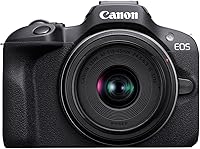
Canon EOS R100 vs Nikon Z50: Which to Buy? (November 2026)
Buy the Canon EOS R100 for its higher overall score and beginner-friendly bundle; buy the Nikon Z50 II if you want stronger subject tracking and 4K/60p video. The older Nikon Z50 sits between them as a solid budget stills body.
On this page (11 sections)
- Canon EOS R100 vs Nikon Z50 at a glance
- Which camera has the better autofocus?
- How do the sensors and image quality compare?
- Which is better for video?
- How do the two Nikon models differ from each other?
- Which camera is easier to hold and carry?
- Which lenses and accessories will you need?
- How do the prices compare?
- Who should buy the Canon EOS R100?
- Who should buy the Nikon Z50 II?
- Verdict: which camera should you buy?
Buy the Canon EOS R100 for its higher overall score and beginner-friendly bundle; buy the Nikon Z50 II if you want stronger subject tracking and 4K/60p video. In this canon eos r100 vs nikon z50 comparison, the R100 wins for most first-time buyers, while the Z50 II is the better tool for video and action.
The Canon EOS R100 scores 9.7 and includes a stabilized 18-45mm zoom lens in the box. The Nikon Z50 II scores 9.2 and ships as a body only, so you'll need a lens to start shooting.
The original Nikon Z50 scores 8.9 and sits between them as a budget stills option with a lens included.
None of these cameras is a professional body. Each targets beginners and hobbyists who want better image quality than a phone without carrying a heavy kit.
This comparison focuses on what actually separates them for a new buyer.


Canon EOS R100 vs Nikon Z50 at a glance
The Canon EOS R100 is the better first camera for most readers; the Nikon Z50 II is the stronger video and action tool. The original Nikon Z50 is the value stills pick if you want a lens in the box and don't need the newest autofocus.
| Feature | Canon EOS R100 | Nikon Z50 II | Nikon Z50 (original) |
|---|---|---|---|
| Sensor | 24.2MP APS-C CMOS | 20.9MP DX-format | 20.9MP DX-format CMOS |
| Processor | DIGIC 8 | EXPEED 6 | |
| Autofocus | Dual Pixel CMOS AF, 143 zones | 231 points, 9 subject types | 209-point hybrid |
| Video | 4K 24p (cropped), Full HD 60p | 4K UHD/60p, Full HD 120p | 4K Ultra HD |
| Lens in box | RF-S 18-45mm IS STM | No | NIKKOR Z DX 16-50mm VR |
| Rear screen | Fixed 3 in LCD | Tilting LCD | Flip-down LCD |
| Built-in flash | No | Yes | Yes |
| Viewfinder | 2.36m-dot OLED EVF | Electronic viewfinder | Electronic viewfinder |
| Continuous shooting | 6.5 fps | 5 fps | 11 fps |
| Our score | 9.7 | 9.2 | 8.9 |
The table shows the real gaps. The Canon leads on resolution and score, the Z50 II leads on video frame rates and subject detection, and the original Z50 leads on continuous shooting speed among the three.
Which camera has the better autofocus?
The Nikon Z50 II wins on autofocus breadth; the Canon EOS R100 wins on simplicity. If you shoot people and everyday scenes, the R100's system is more than enough.
If you chase birds, pets or vehicles, the Z50 II's subject detection is the deciding feature.
The Canon EOS R100 uses Dual Pixel CMOS AF with 143 autofocus zones. Canon's phase-detection system covers a wide part of the frame and switches smoothly between stills and video.
It tracks people, faces and stationary subjects reliably.
The Nikon Z50 II goes further. It detects and tracks nine distinct subjects, including people, dogs, cats, birds and vehicles, across 231 autofocus points.
Dedicated bird and airplane modes sharpen accuracy for those subjects.
The original Nikon Z50 uses a 209-point hybrid system. Its spec sheet lists contrast detection as the autofocus technology, which tells you it's an older generation than the Z50 II's multi-subject system.
For a family photographer, the R100's face tracking covers most shots. For a wildlife or sports beginner, the Z50 II's subject recognition saves missed frames.
That's the honest split.
How do the sensors and image quality compare?
The Canon EOS R100 has the higher resolution at 24.2MP; the Nikon Z50 II and original Z50 sit at 20.9MP. The gap is modest and won't decide your purchase on its own.
Processing and lens quality matter as much as pixel count.
The R100 pairs its 24.2MP APS-C CMOS sensor with a DIGIC 8 image processor. Canon says this combination delivers vibrant, detailed images and smooth video.
The 3:2 aspect ratio matches standard photo prints.
The Nikon Z50 II uses a 20.9MP DX-format sensor, which is the same APS-C size class. Nikon says the sensor is several times larger than a typical smartphone's and captures lifelike colors from dawn to dusk.
It records 14-bit files, while the R100 lists 12-bit depth.
The original Nikon Z50 also uses a 20.9MP DX-format CMOS sensor, paired with EXPEED 6 processing. Its native ISO range runs from 100 to 51,200.
Both brands produce strong JPEGs straight from camera. The Canon's extra megapixels give you a little more room to crop.
The Nikon's 14-bit depth on the Z50 II gives more color data in raw files.
Which is better for video?
The Nikon Z50 II is the clear video winner with 4K UHD/60p and Full HD 120p slow motion. The Canon R100 records 4K but crops the frame, and the original Z50 tops out at 4K Ultra HD without the higher frame rates.
The Z50 II records 4K UHD at 60p, which smooths motion for action and moving subjects. It also offers in-camera 120p slow motion in Full HD, plus built-in electronic VR and a product review mode for creators.
The Canon EOS R100 shoots 4K at 24fps with a crop, and Full HD at 60p. Its Dual Pixel autofocus works in both modes, so focus stays locked on faces during video.
The crop means wide shots need a wider lens or more distance.
The original Nikon Z50 records 4K Ultra HD and 1080p slow motion at 120fps. It also handles time-lapse in 4K and in-camera trimming, so you can cut a clip and send it to your phone.
If you vlog or film family events, the Z50 II's 60p 4K is the stronger base. If you mostly shoot stills with occasional clips, the R100's 4K 24p is fine, and its autofocus keeps subjects sharp.
How do the two Nikon models differ from each other?
The Nikon Z50 II is the newer, video-focused body; the original Z50 is the budget stills camera with a lens included. Choosing between them comes down to whether you want frame rates and subject detection or a complete kit at a lower score.
The Z50 II adds 4K UHD/60p, nine-subject detection across 231 points, a built-in flash and 31 Picture Control presets. It also supports wireless photo sharing through Nikon's SnapBridge app.
Those presets let you preview a look in real time as you shoot.
The original Z50 keeps a 20.9MP sensor, 209-point hybrid autofocus and 4K Ultra HD video. Its flip-down LCD activates a self-portrait mode, which makes it the better vlogging pick of the two Nikons.
It ships with the NIKKOR Z DX 16-50mm VR lens.
The original Z50 also has the faster continuous shooting figure at 11 fps, compared with 5 fps on the Z50 II. For stills of moving subjects, that's a real advantage.
Buy the Z50 II for video and modern autofocus. Buy the original Z50 when you want a complete stills kit and the flip-down screen for selfies.
Which camera is easier to hold and carry?
Both cameras are compact mirrorless bodies built for small bags and everyday carry. The main handling differences come from the screen, the viewfinder and whether a lens is included.
The Canon EOS R100 has a 2.36m-dot OLED electronic viewfinder and a fixed 3-inch LCD screen. The fixed screen means you can't tilt it for high or low angles, and it makes self-framing harder.
The camera has no built-in flash.
The Nikon Z50 II has a tilting LCD and a built-in flash. The flash helps indoors and at night, and Night Portrait mode balances slow-shutter flash shots.
Nikon describes the body as lightweight and compact enough for a small bag.
The original Nikon Z50 has a flip-down touch LCD and a pop-up flash. Its deep grip and magnesium alloy construction give it a sturdy feel.
It also includes silent photography mode for quiet scenes.
For travel and family use, the R100's included lens means one purchase and no extra shopping. The Z50 II's tilting screen and flash make it more flexible in mixed lighting.
The original Z50's flip-down screen is the friendliest for selfies.
Which lenses and accessories will you need?
The Canon EOS R100 arrives ready to shoot; both Nikon bodies push you to plan lenses first. The Canon kit includes the RF-S 18-45mm f/4.5-6.3 IS STM lens, a general-purpose zoom for portraits, snapshots, landscapes and vlogs.
It has built-in image stabilization to steady handheld shots.
The Nikon Z50 II ships as a body only, so budget for a lens. It uses the Nikon Z mount and pairs with DX-format lenses.
The wide mount is a Nikon design point that the brand says captures more light.
The original Nikon Z50 includes the NIKKOR Z DX 16-50mm f/3.5-6.3 VR lens. That's a compact stabilized zoom with a wider wide end than the Canon's 18mm, which helps group shots and tight interiors.
If you want the lowest-effort start, the Canon bundle wins. If you already own Nikon Z lenses or plan to build a lens collection, the Z50 II body-only option makes more sense.
For a deeper look at the Canon body alone, read our Canon EOS R100 review.
How do the prices compare?
We don't quote prices here, but the kit contents change the real cost. A body-only camera needs a lens, a memory card and often a bag before you can shoot.
A bundle spreads those purchases into one order.
The Canon EOS R100 comes as a camera and lens bundle, so your first shoot is covered. It takes SD cards and connects over Wi-Fi and Bluetooth to phones, tablets and computers.
The Nikon Z50 II is body only and takes SD cards. It connects over Wi-Fi, Bluetooth, HDMI and USB.
You'll need to add a lens, and its built-in flash saves you buying a separate unit for indoor shots.
The original Nikon Z50 includes the 16-50mm VR lens and takes microSDXC cards. Note the card type: microSDXC differs from the SD cards the other two use, so check what you already own.
On budget, the Canon bundle and the original Nikon Z50 kit give you more for one payment. The Z50 II costs more once you add glass, but its video and autofocus justify the step up for some buyers.
Who should buy the Canon EOS R100?
Buy the Canon EOS R100 if you're new to mirrorless and want a complete kit with reliable face autofocus. It's the pick for family photos, travel snapshots and occasional 4K clips without shopping for a lens.
Its 24.2MP sensor and DIGIC 8 processor handle everyday light well. Dual Pixel CMOS AF with 143 zones keeps faces and people sharp, and the included 18-45mm lens has stabilization built in.
Wi-Fi and Bluetooth make sharing simple.
The fixed screen is the main trade-off. If you frame yourself often or shoot from low angles, a tilting screen is more comfortable.
The cropped 4K mode also limits wide video shots.
If you later want a step-up Canon body, our Canon EOS R50 review covers the model above it. And if you're weighing those two Canons directly, our Canon R50 vs R100 comparison breaks down the differences.
Who should buy the Nikon Z50 II?
Buy the Nikon Z50 II if video, subject tracking and creative color presets matter more than having a lens in the box. It's the camera for aspiring vloggers, pet photographers and anyone who shoots moving subjects.
Its 4K UHD/60p recording and Full HD 120p slow motion give you more video options than either rival. Nine-subject detection tracks people, dogs, cats, birds and vehicles, and dedicated bird and airplane modes add accuracy.
The built-in flash and 31 Picture Control presets help in low light and speed up your look.
The body-only packaging means you'll buy a lens separately. Its 20.9MP sensor also gives fewer pixels to crop than the Canon's 24.2MP.
Those are the trade-offs for its video strengths.
If you want a compact camera with a viewfinder and a flip screen for less, the original Nikon Z50 remains a sensible stills choice. Compare it with the Canon in our Canon EOS R10 vs Sony A6400 matchup if you're also looking at other brands.
Verdict: which camera should you buy?
The Canon EOS R100 is the better buy for most first-time mirrorless shoppers, and the Nikon Z50 II is the right camera for video and action. The canon eos r100 vs nikon z50 decision really comes down to whether you want a ready-to-shoot kit or the strongest video features.
Pick the Canon EOS R100 for its 9.7 score, its 24.2MP sensor and its included stabilized zoom lens. It's the simplest path from phone photos to real camera images.
Pick the Nikon Z50 II when 4K UHD/60p, nine-subject autofocus and a built-in flash matter more than resolution. It's the better long-term tool for creators who shoot motion.
Pick the original Nikon Z50 if you want a complete stills kit, a flip-down screen for selfies and faster continuous shooting at a lower score. It's the budget-friendly middle ground.
Whichever you choose, start with the kit that gets you shooting soonest. A camera you actually carry beats one that waits for the next lens purchase.
Frequently asked questions
Is the Canon EOS R100 or Nikon Z50 better for beginners?
The Canon EOS R100 is the easier first camera. It bundles a stabilized 18-45mm lens and uses Dual Pixel CMOS AF with 143 zones, and its simplified menus and auto scene modes lower the learning curve.
The Nikon Z50 II offers more creative controls and ships as a body only.
Which has better autofocus, the Canon R100 or Nikon Z50 II?
The Nikon Z50 II tracks more subject types. It detects and follows people, dogs, cats, birds and vehicles across 231 autofocus points.
The Canon R100 uses Dual Pixel CMOS AF with 143 zones for faces and people, which is reliable but less varied for wildlife or sports.
Can the Canon EOS R100 shoot 4K video?
Yes, the Canon EOS R100 records 4K at 24fps, though the 4K mode is cropped. It also shoots Full HD at 60fps.
The Nikon Z50 II records 4K UHD at 60p and adds in-camera 120p slow motion in Full HD.
Do both cameras have a viewfinder?
The Canon EOS R100 has a 2.36m-dot OLED electronic viewfinder. The Nikon Z50 II has an electronic viewfinder as well, and the original Nikon Z50 includes one too.
An EVF helps in bright light when the rear screen is hard to see.
Which camera is better for vlogging?
The Nikon Z50 original is the stronger vlogging pick here. Its flip-down LCD activates a self-portrait mode and its 16-50mm VR lens stabilizes handheld footage.
The Canon R100's fixed screen makes framing yourself harder, though its Dual Pixel autofocus keeps your face sharp.
Should I buy the Nikon Z50 II or the original Nikon Z50?
Buy the Z50 II if video and subject tracking matter most. Its 4K UHD/60p recording, nine-subject autofocus and built-in flash beat the original Z50's 209-point hybrid system and 4K Ultra HD video.
The original Z50 is the better budget stills body because it includes a lens.